
Planning permission, entrance widening and footpath dishing
Resurfacing an existing driveway without changing the road opening is normally exempt if rainwater stays on your site. Creating a new vehicular entrance, widening a roadside opening (most Irish councils cap front openings at 3.0 m to 3.5 m), or dishing a public footpath requires council planning permission and a Section 13 Road Opening Licence.
When surfacing is exempt, when council planning applies for road openings above 3.5 m, and how Section 13 footpath dishing works.
Free, no obligation. One local contractor prices it, not five.
- 3.0–3.5 mtypical council front entrance cap
- Section 13Roads Act licence to dish footpaths
- €80Section 5 council exemption check
- 4 weeksstatutory Section 5 decision time

Four Irish planning scenarios explained plainly
Homeowners often confuse resurfacing inside their front wall with altering the roadside opening. Under Schedule 2, Part 1 of the Planning and Development Regulations 2001 (S.I. No. 600 of 2001) and Article 9 traffic-safety limits, what touches the public road or footpath is what triggers council applications.
Resurfacing an existing driveway like-for-like
- Usual council requirement
- Normally exempt
- Key check
- Road entrance stays unchanged and rainwater stays inside your site.
Converting front lawn inside existing gates to parking
- Usual council requirement
- Usually exempt if SuDS-compliant
- Key check
- Confirm no open-plan estate condition removes front-garden exemptions.
Widening an existing road entrance or knocking extra front wall
- Usual council requirement
- Planning permission required
- Key check
- Most councils limit suburban front entrances to 3.0 m to 3.5 m max.
Creating a brand-new vehicular entrance & dishing the kerb
- Usual council requirement
- Planning permission + Section 13 licence
- Key check
- Council assesses sightlines, pedestrian safety and on-street parking loss.
House on a Protected Structure or Architectural Conservation Area
- Usual council requirement
- Exemptions do not apply
- Key check
- Check with the local planning counter before altering front walls or surfaces.
Price my driveway
Four quick taps and our price shows before we ask for a phone number. One local contractor rings you, not five.
Driveway kerbing, drainage or mixed works, under 50 m², full dig-out with ACO drain and kerbing: €2,900 to €7,800, excavated and laid.
How the price is worked out
The range reflects going Irish per-m² driveway rates for that surface, area band and groundwork depth. Full dig-out ranges cover 200 to 250 mm excavation, Terram geotextile membrane, 150 mm compacted Clause 804 stone (or permeable Type 3 stone for resin bound) and the finished wearing course. Selecting ACO drains and kerbing adds linear channel drainage, concrete-haunched edging and soakaway work. Grab-lorry spoil haulage, recessed manhole trays, steps and council footpath dishing depend on site access and are priced in writing after a contractor measures your drive.
How Section 13 footpath dishing works in Ireland
Driving over a full-height public concrete kerb damages underground utility ducts and breaks the council path. Lowering (dishing) the kerb and pouring a reinforced sloped apron across the public footpath is governed by Section 13 of the Roads Act 1993.
- Secure planning permission first (if new or widened). Councils will not issue a road-opening permit for an unauthorised vehicular entrance.
- Apply to your county or city council roads department. Either the council's own direct labour crew prices and dishes the kerb, or they approve an insured contractor holding the required public liability cover (typically €6.5 m) and T2 Road Opening Licence.
- Budget €900 to €2,200 for footpath dishing works. Cost depends on footpath width, concrete thickness, utility cover adjustments and whether the council charges an inspection bond.
- Use Section 5 for written certainty. If you are unsure whether a front-garden alteration needs permission, a Section 5 declaration costs €80 and gives your council's binding written ruling within 4 weeks.
Related driveway guides
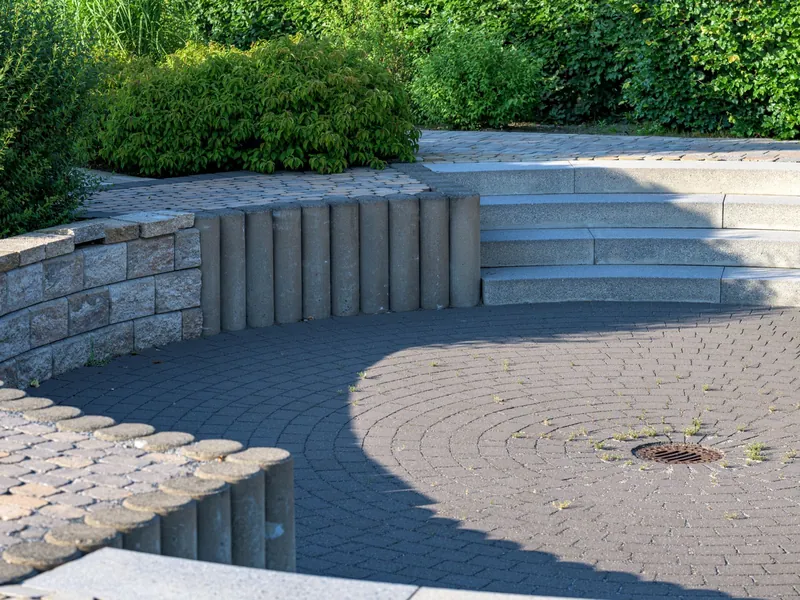 Granite kerbing & ACO drainsHaunched granite borders, linear channel drains, soakaways and front-garden widening.
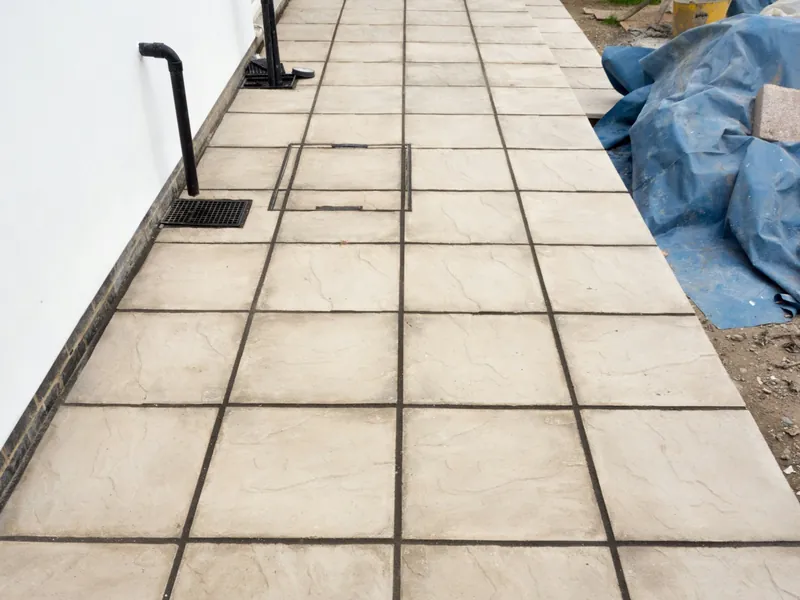 SuDS drainage & ACO channelsKeeping driveway runoff off the public footpath with ACO drains, soakaways and correct falls.
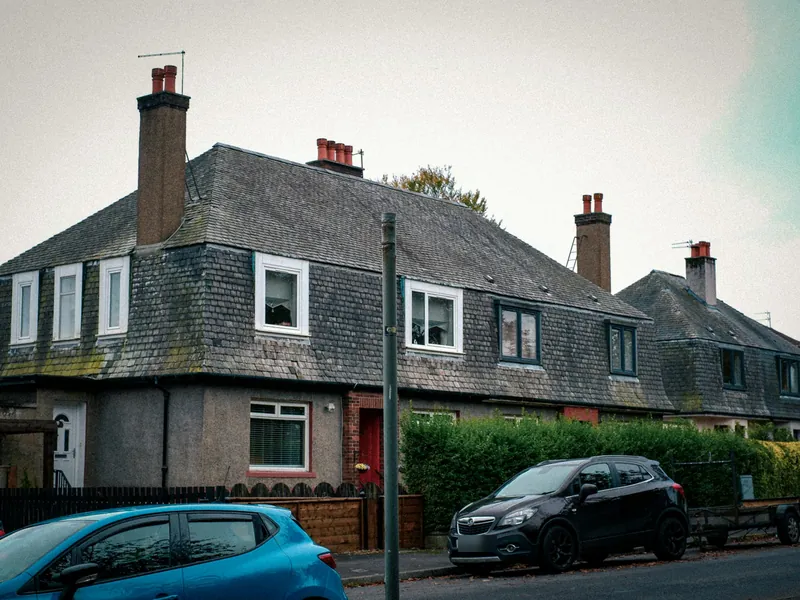 Dublin driveway contractorsFront-garden conversions, 3.0–3.5 m entrance caps and footpath dishing across the four Dublin councils.
 Driveway prices per m²Complete Irish cost guide across all six surfaces, spoil skips, kerbing and 13.5% VAT.
 Sub-base & Clause 804 dig-outWhy 200–250 mm excavation, Terram membrane and 150 mm compacted Clause 804 stop rutting.
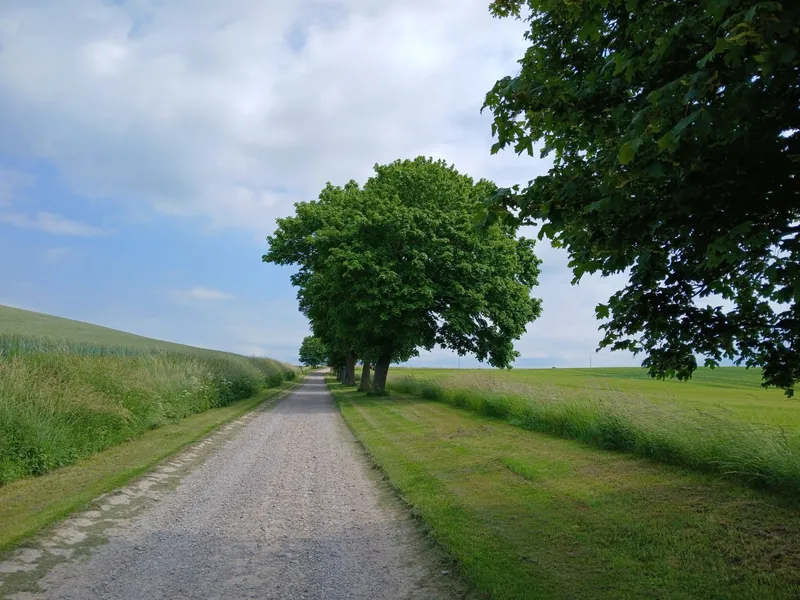 Tar and chip avenuesHot bitumen and rolled stone chippings for rural drives and long farm lanes.
Common questions before digging starts
Do I need planning permission to tarmac or pave over my front lawn?
Replacing an existing driveway or laying a permeable/SuDS-drained parking area inside an existing vehicular entrance is often exempt, unless your estate has an open-plan covenant or you are creating or widening the roadside gap.
Why do Irish councils cap front driveway entrances at 3.0 m to 3.5 m?
Wider openings across suburban footpaths increase pedestrian crossing risk and remove on-street public parking spaces. Most Dublin and urban county development plans enforce a 3.0 m to 3.5 m ceiling.
Can my driveway contractor lower the council footpath kerb for me?
Only if they apply for and receive a Section 13 Road Opening Licence from your local authority (or the council's own roads crew carries out the dishing directly after planning approval).
What if I want electric gates later while widening my driveway?
Bury two 50 mm armoured duct sleeves across the entrance threshold and back toward the house before surfacing goes down so nobody ever has to cut open your new drive.
All driveway pages, guides and counties
Driveway surfaces
Prices, build-up & rules
Check your driveway price before anyone calls
Pick your surface, rough area in m² and base prep. When you want a written site quote, your outline goes to a single driveway contractor in your county.